
INSIDE EMBRYO · Andrology
Understand sperm.
Look beyond one number.
Explore semen assessment, sperm preparation and the language of male reproductive health. Learn what laboratory findings describe—and why their meaning depends on the clinical context.

LOOK. READ. UNDERSTAND.
What does the laboratory assess?
Explore ten illustrated topics covering semen analysis, sperm selection, retrieval and DNA fragmentation. These explain principles, not instructions for carrying out procedures.
This image could not load. Use the full-size image link above to try opening it directly.
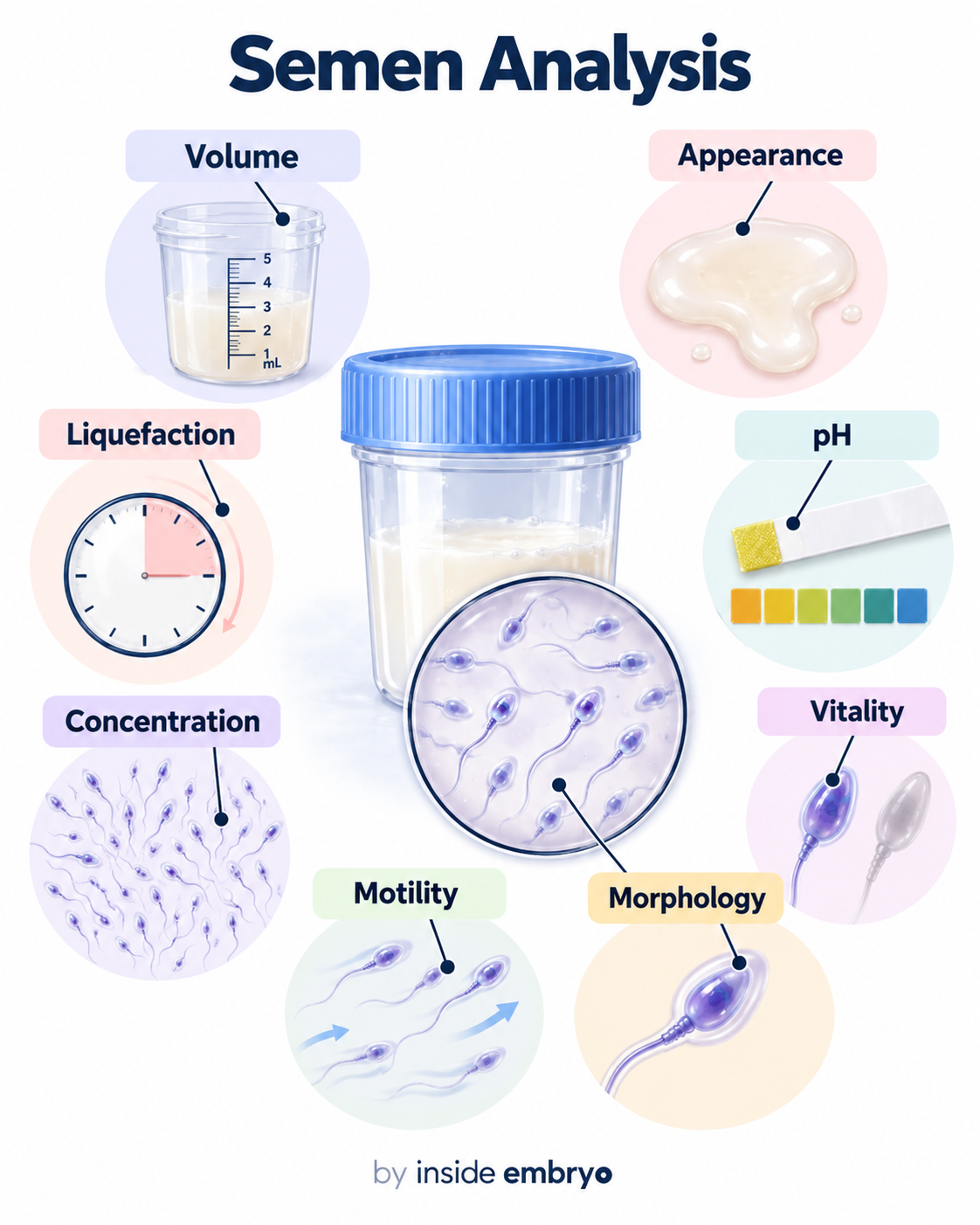
Semen Analysis
Semen analysis evaluates several characteristics of an ejaculate rather than sperm concentration alone. Commonly assessed parameters include volume, liquefaction, pH, concentration, motility, morphology and vitality.
This image could not load. Use the full-size image link above to try opening it directly.
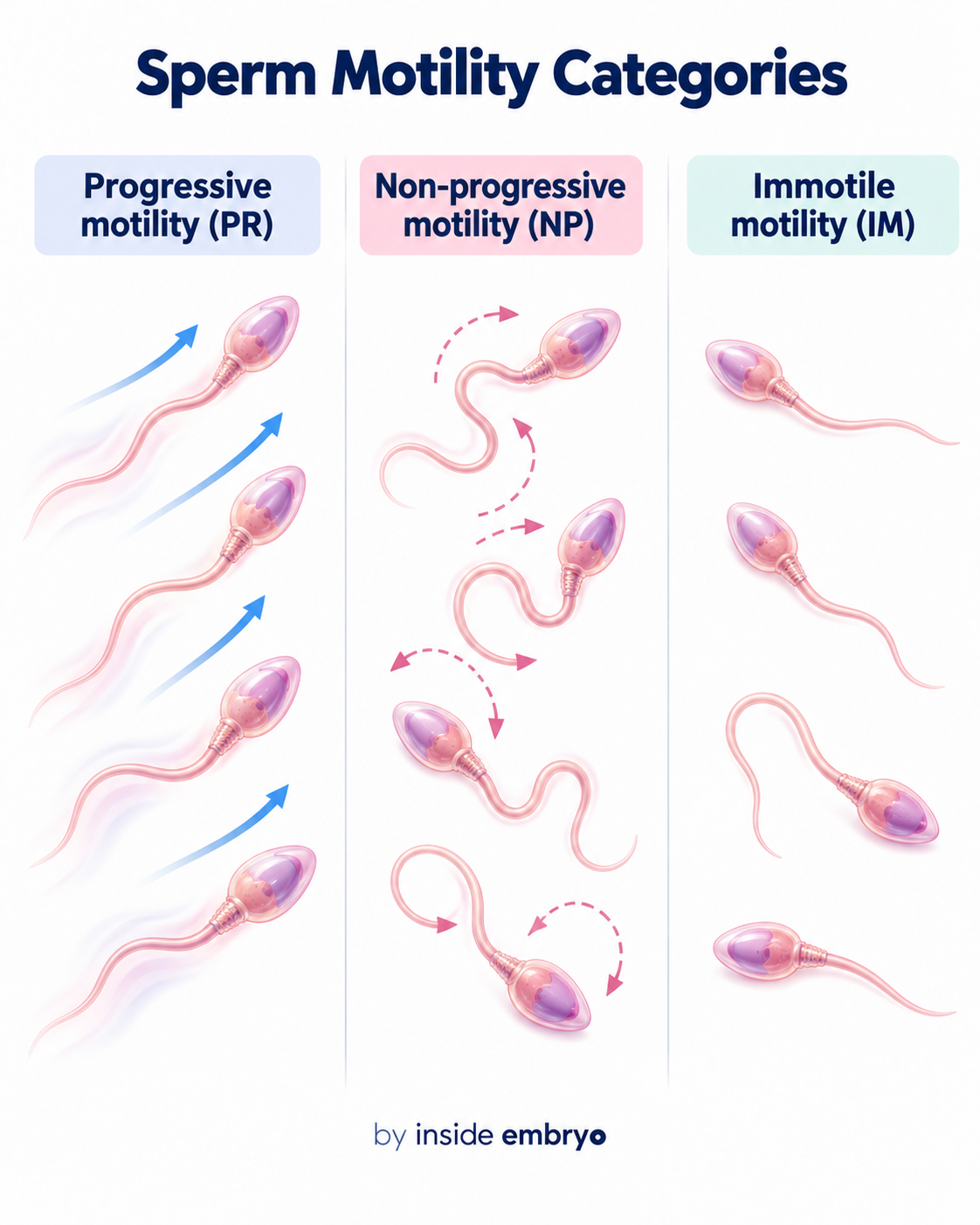
Sperm Motility Categories
Sperm motility describes the movement of spermatozoa during microscopic examination. Sperm may demonstrate progressive motility, non-progressive motility or no movement.
This image could not load. Use the full-size image link above to try opening it directly.
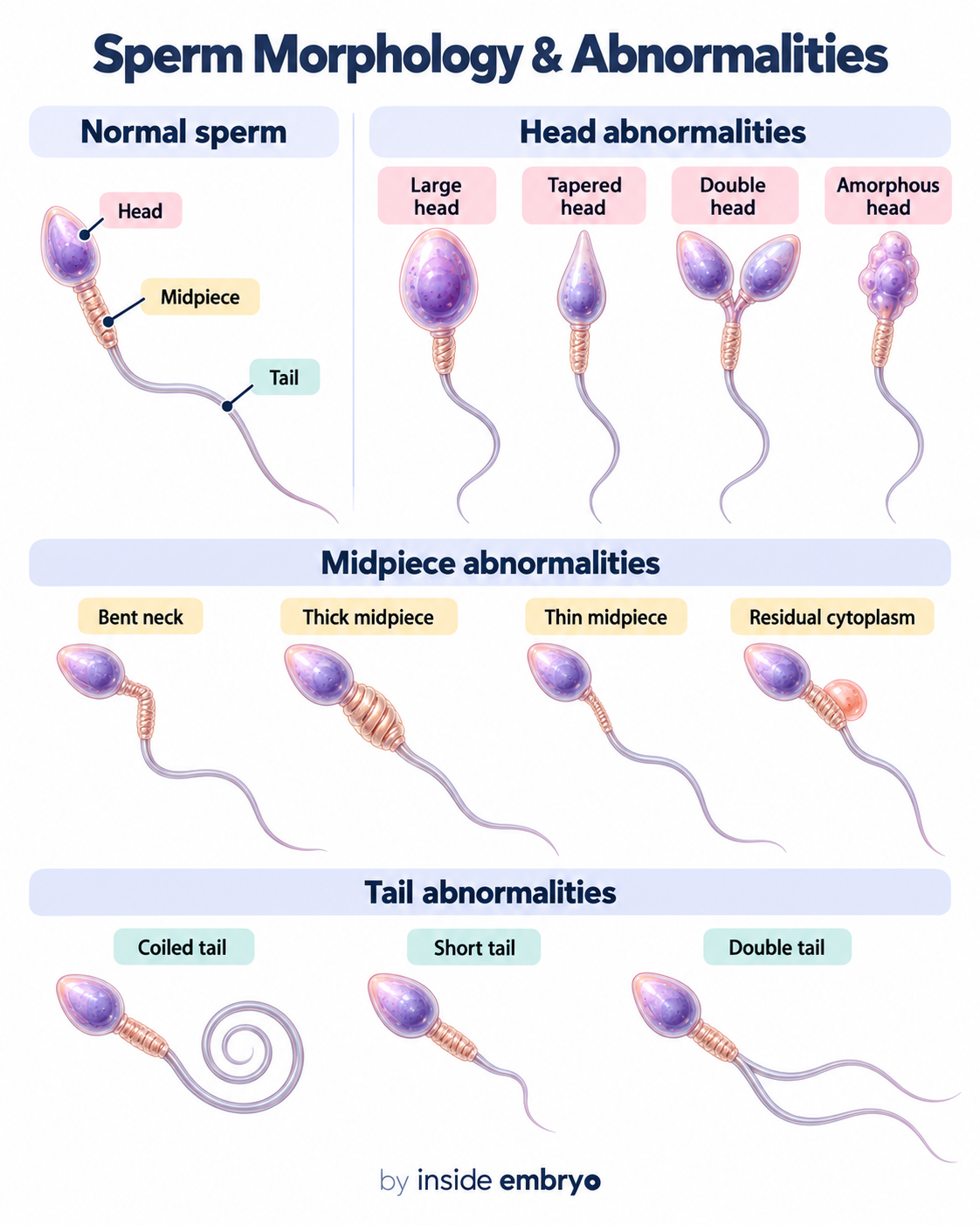
Sperm Morphology & Abnormalities
Morphology assessment examines the structural appearance of spermatozoa. Abnormalities may involve the head, connecting region and midpiece, or flagellum and may occur individually or in combination.
This image could not load. Use the full-size image link above to try opening it directly.
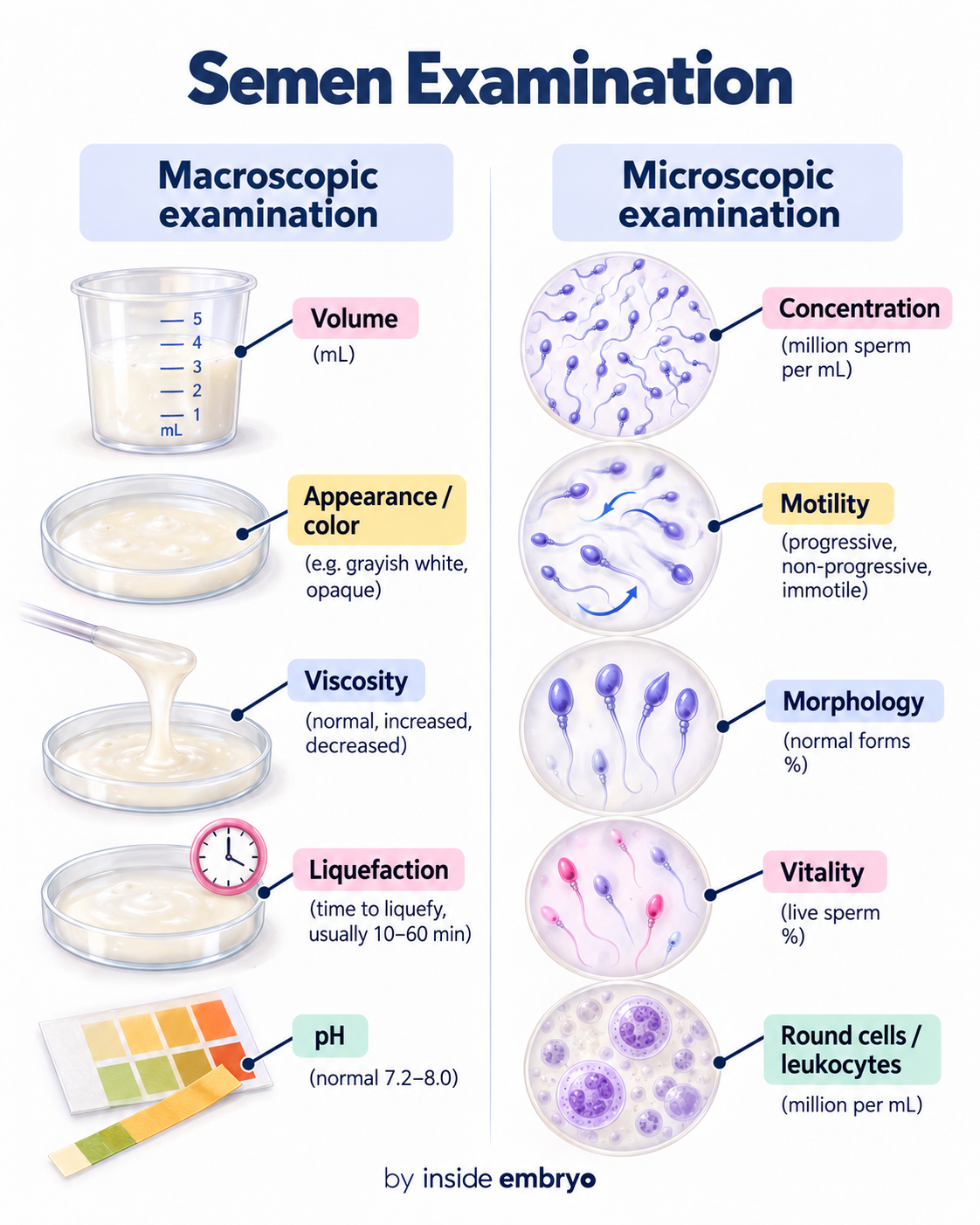
Macroscopic & Microscopic Examination
Semen examination combines macroscopic observations with microscopic assessment. Macroscopic examination includes characteristics such as volume, appearance, viscosity, liquefaction and pH, while microscopy evaluates sperm concentration, motility, morphology and other cellular findings.
This image could not load. Use the full-size image link above to try opening it directly.
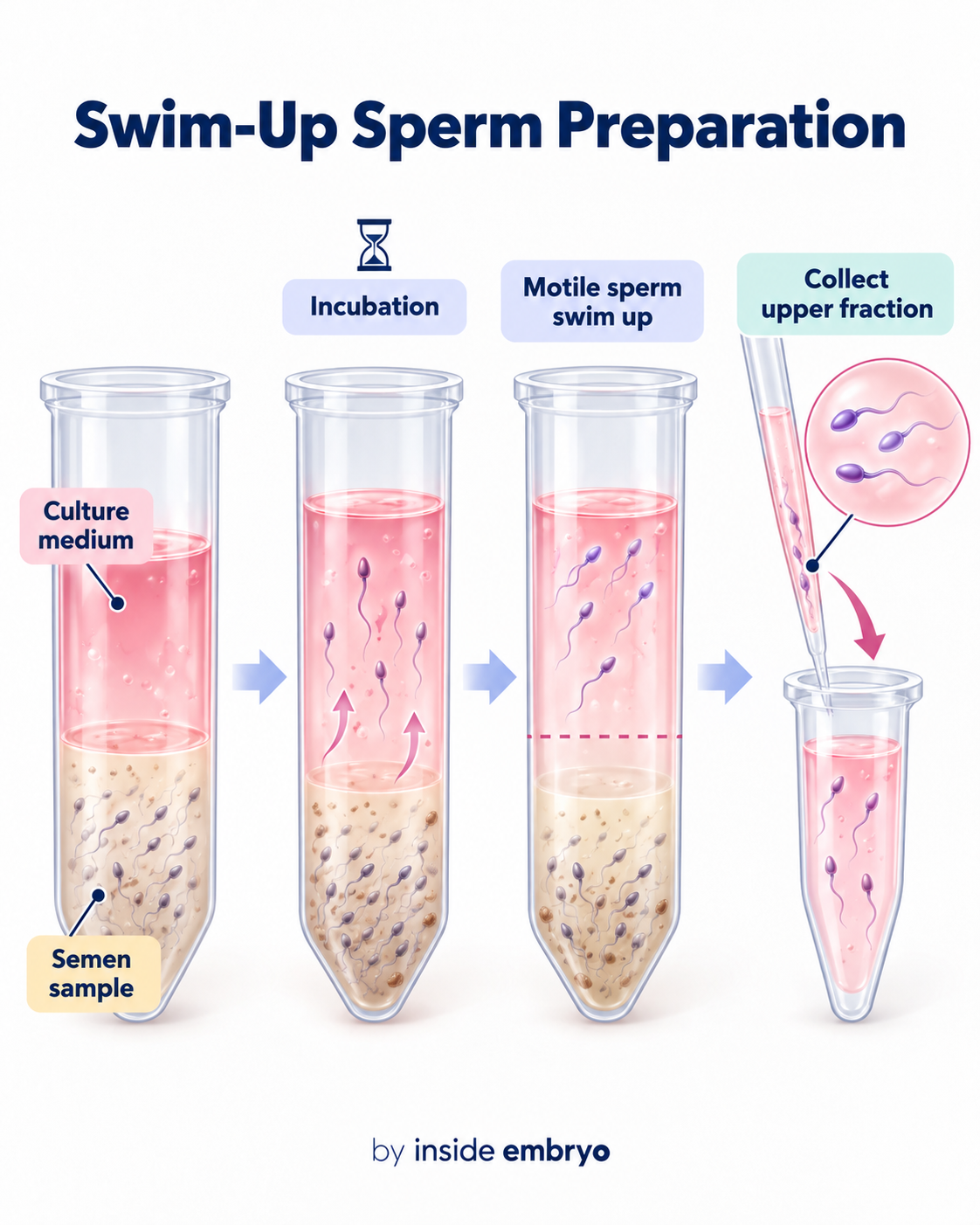
Swim-Up Sperm Preparation
The swim-up method uses the ability of motile spermatozoa to migrate from the semen fraction into an overlying culture medium. The upper fraction can then contain a population enriched with motile sperm.
This image could not load. Use the full-size image link above to try opening it directly.
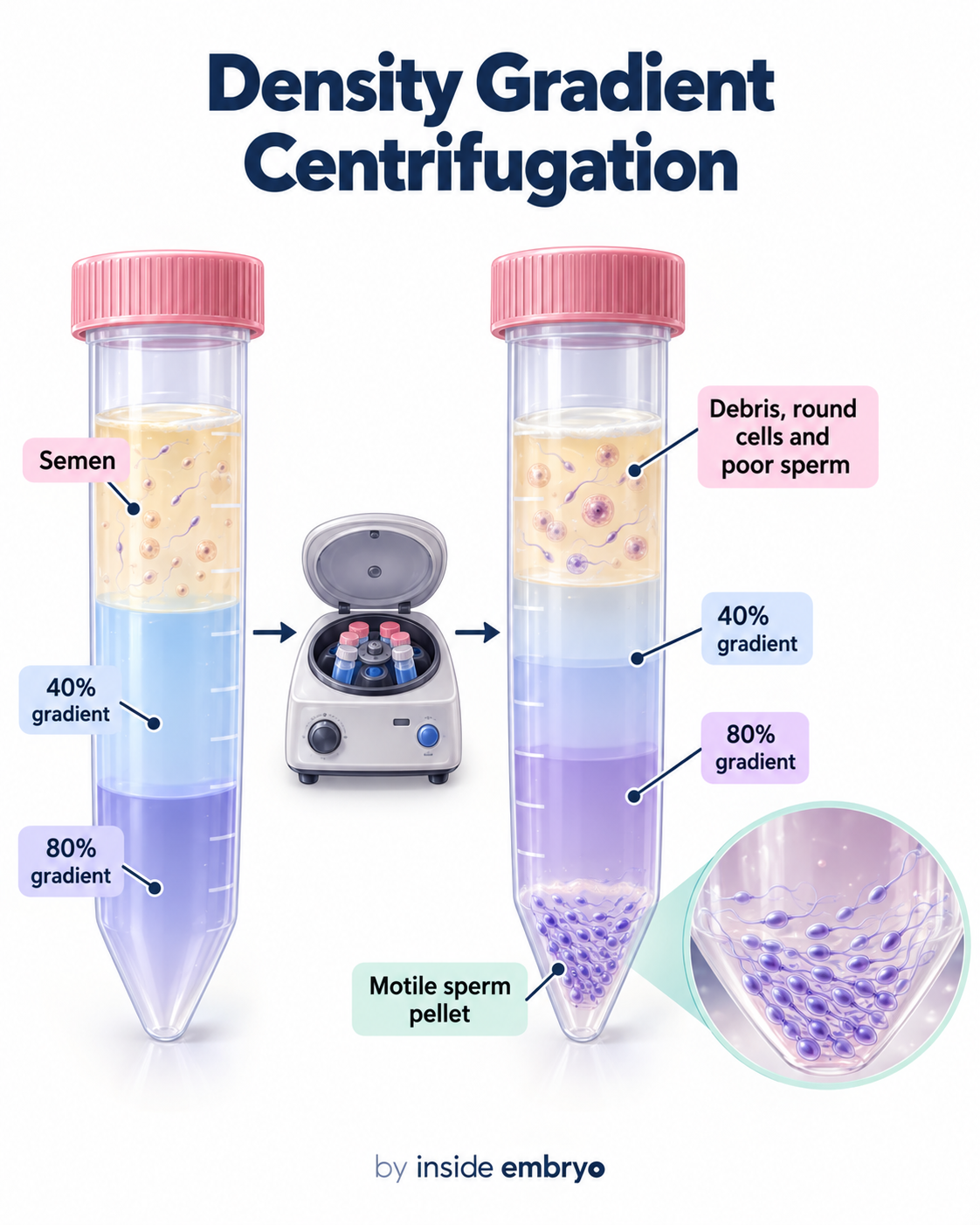
Density Gradient Centrifugation
Density gradient preparation separates components of a semen sample according to their behaviour through media of different densities during centrifugation. A sperm-rich fraction can subsequently be recovered from the lower portion of the tube.
This image could not load. Use the full-size image link above to try opening it directly.
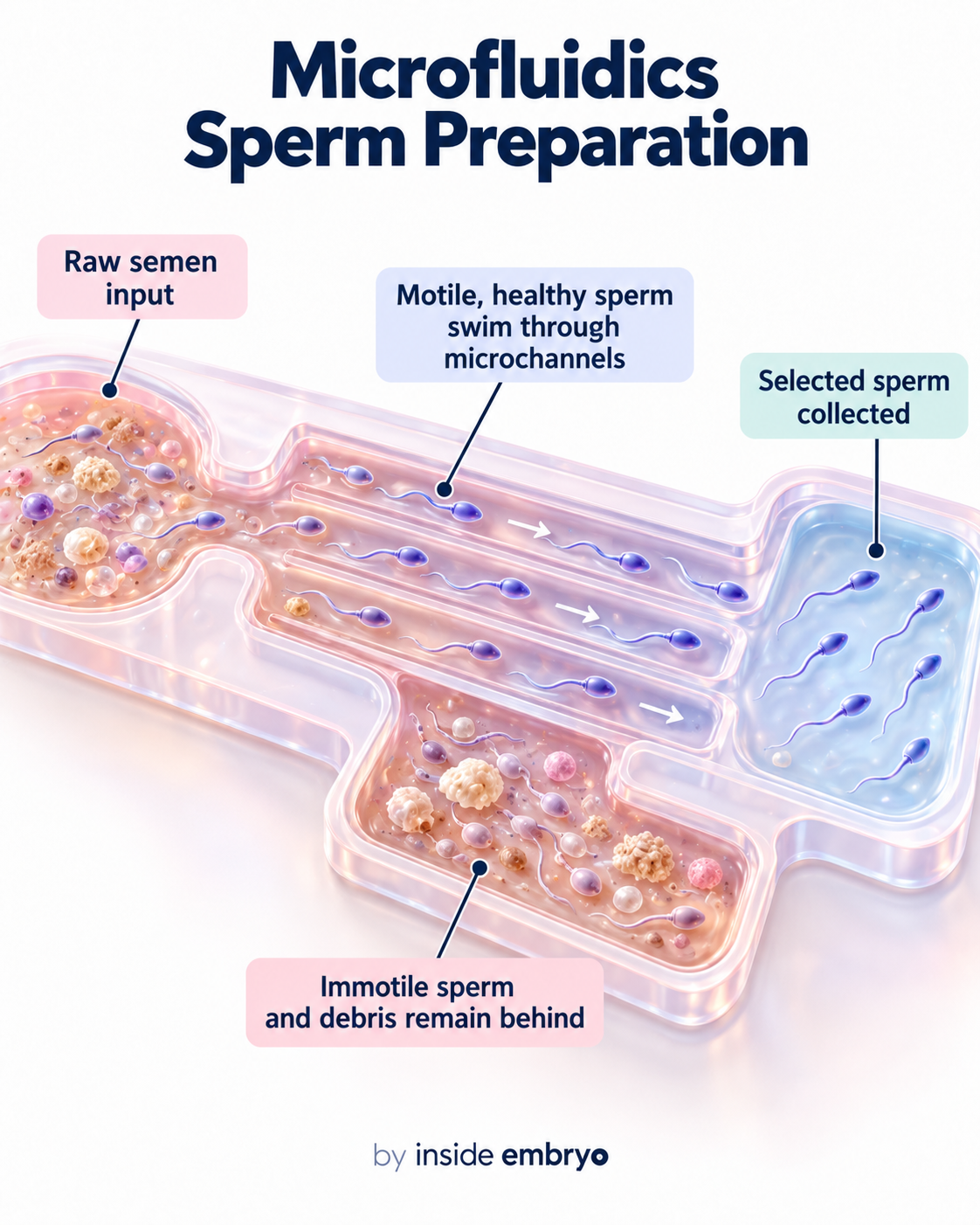
Microfluidic Sperm Preparation
Microfluidic systems use small channels and device-specific selection mechanisms to recover a population of sperm, often using their ability to move. Devices and sample preparation requirements differ.
This image could not load. Use the full-size image link above to try opening it directly.
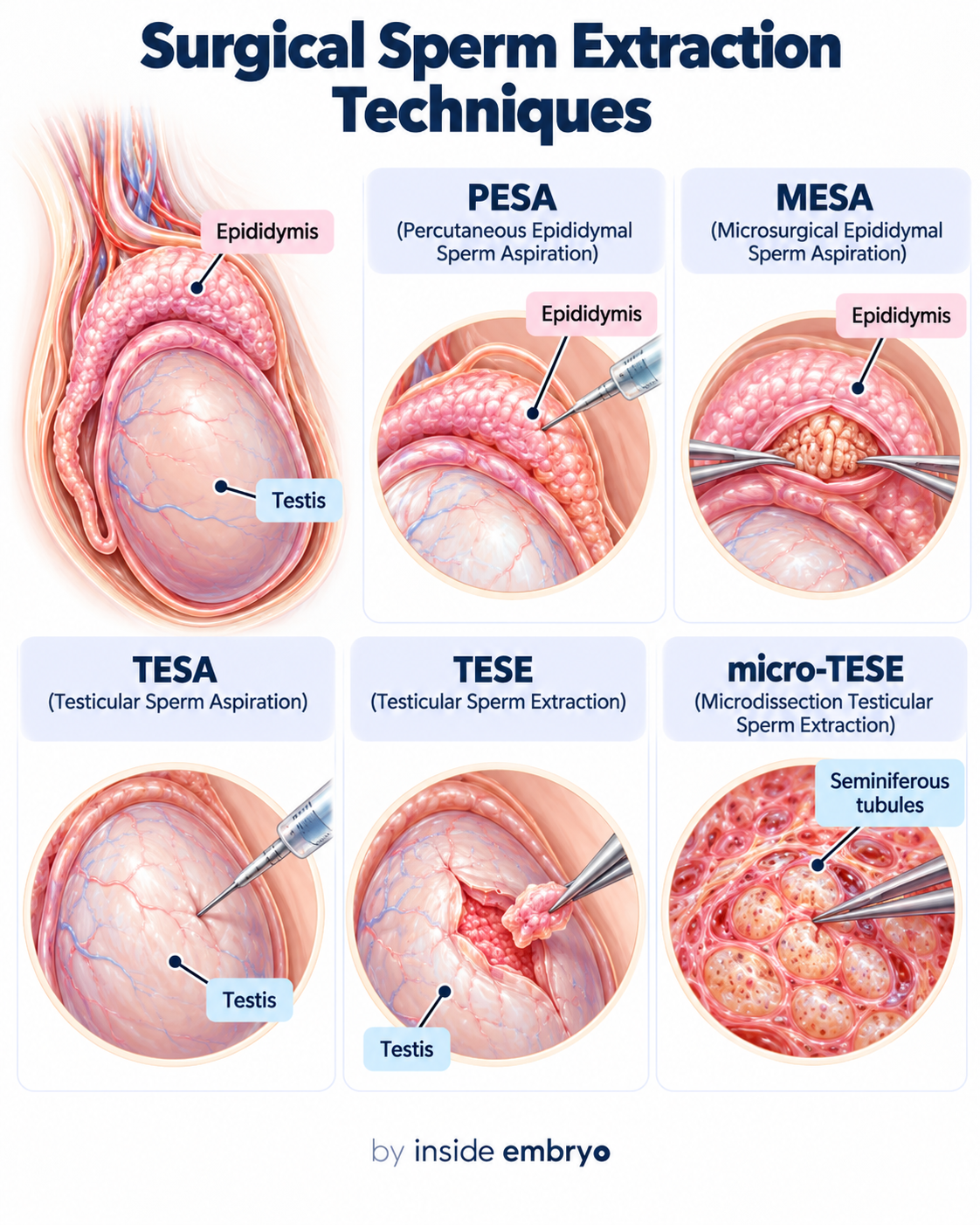
Surgical Sperm Extraction Techniques
Surgical sperm retrieval may obtain spermatozoa from the epididymis or testis. Common terms include PESA, MESA, TESA, TESE and micro-TESE, which differ in their anatomical source and method of retrieval.
This image could not load. Use the full-size image link above to try opening it directly.
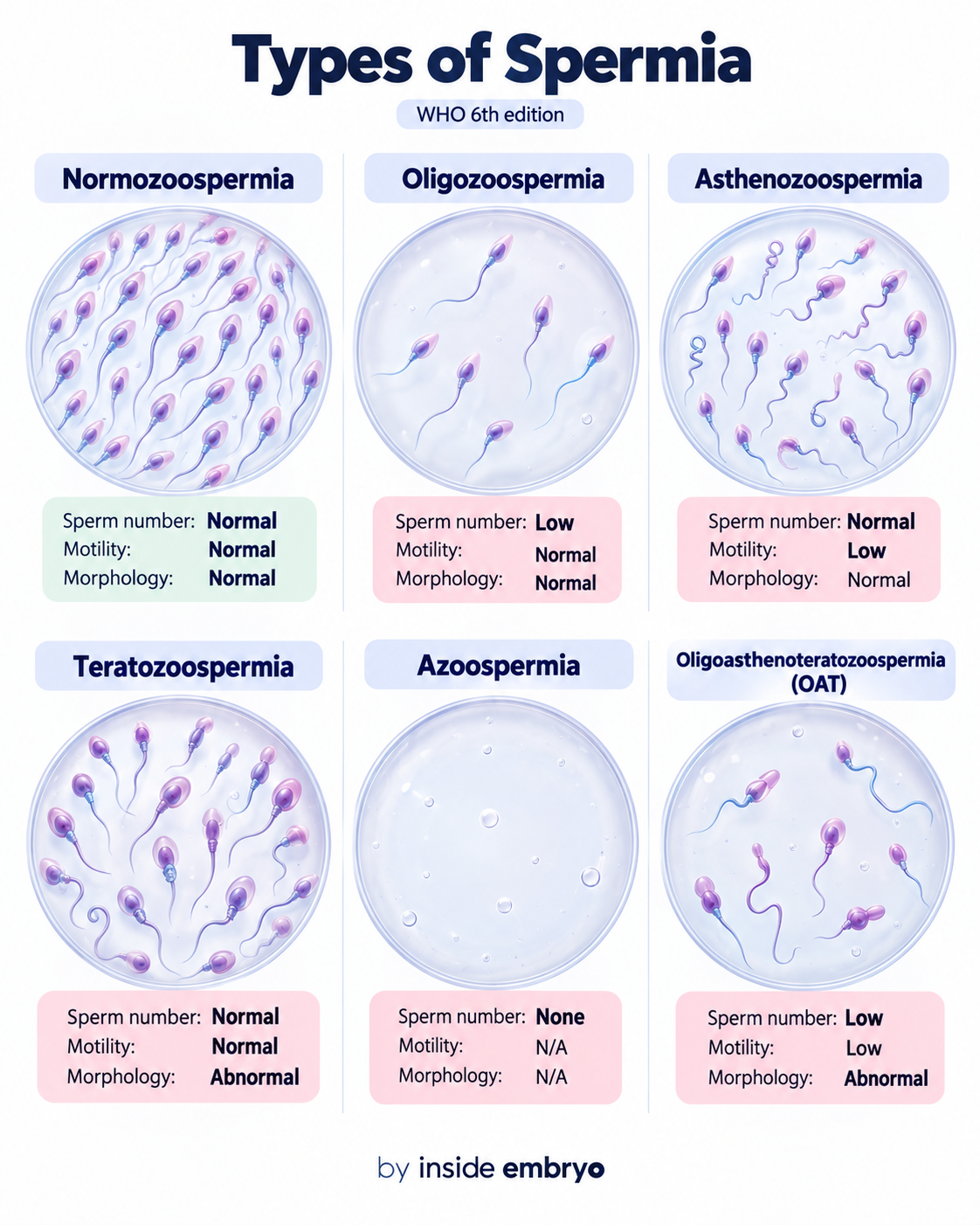
Common Semen Analysis Terms
Terms such as oligozoospermia, asthenozoospermia, teratozoospermia and azoospermia describe patterns identified during semen examination. Combined abnormalities may also occur, such as oligoasthenoteratozoospermia.
This image could not load. Use the full-size image link above to try opening it directly.
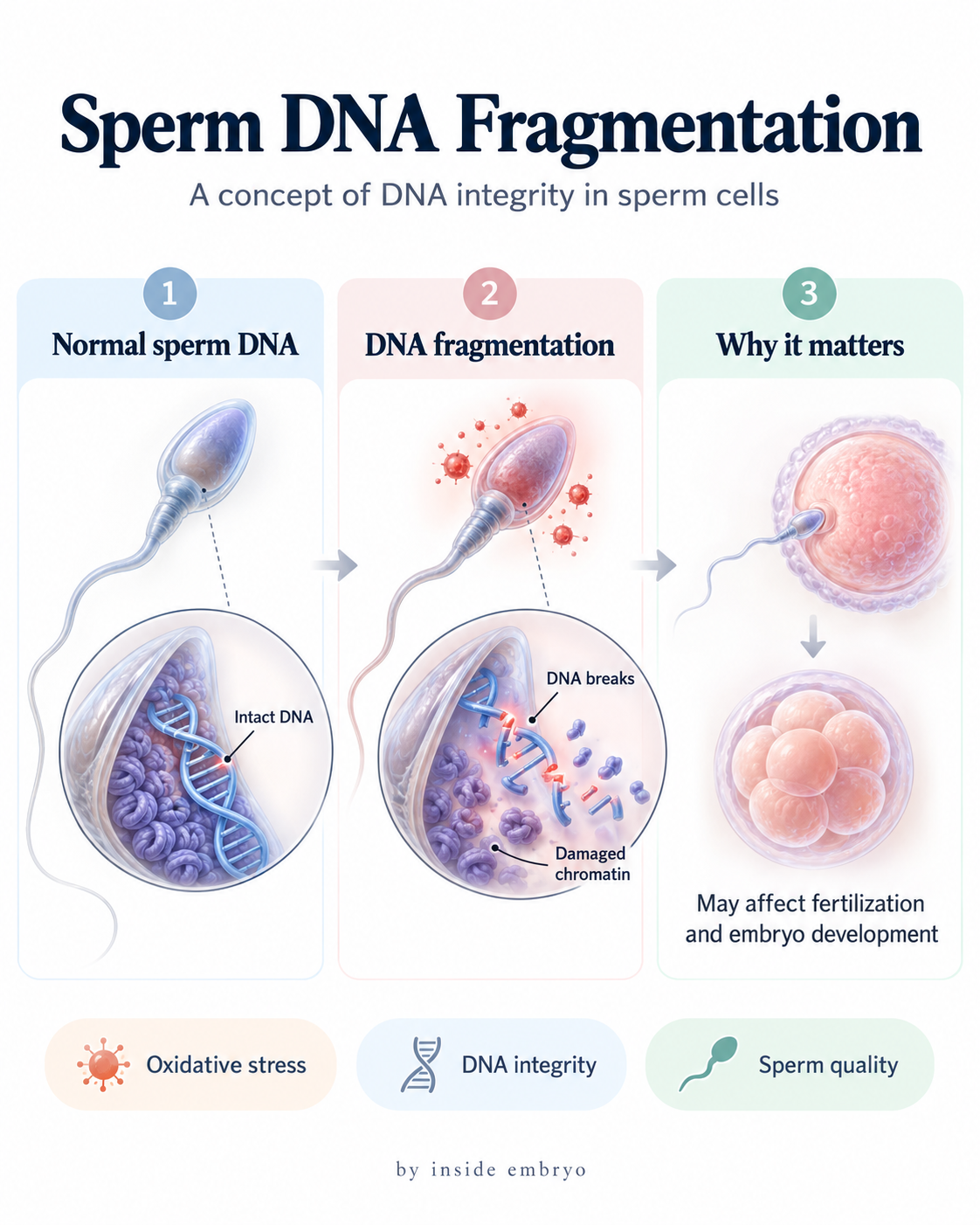
Sperm DNA Fragmentation
Sperm DNA fragmentation refers to breaks or damage affecting DNA within the sperm nucleus. It is different from conventional assessment of concentration, motility and morphology and is evaluated using specialised assays.
Swipe across the pictures. On a computer, use the arrows or focus the carousel and press ← / →.
CONTINUE YOUR READING
The latest in Andrology.
A little more detail, one article at a time.
The latest published article will load here on the website.
A LITTLE CLARITY GOES A LONG WAY
You may have heard…
Let’s look at the facts.
Five common misunderstandings about andrology. Explore the facts beside each one.
01 / Andrology
A normal sperm count proves fertility.
Concentration is only one part of semen analysis. No single routine parameter can provide a complete fertility prediction.
02 / Andrology
A single abnormal result is a permanent diagnosis.
Semen results can vary. Your clinician may recommend repeat testing and assessment of possible contributing factors.
03 / Andrology
An immotile sperm is always a dead sperm.
Motility describes movement; vitality assesses whether sperm are alive. They are different measurements.
04 / Andrology
DNA fragmentation testing replaces semen analysis.
It is a separate investigation used in selected circumstances, rather than a replacement for the initial clinical assessment and semen analysis.
05 / Andrology
ICSI repairs every sperm problem.
ICSI introduces a sperm into an oocyte. It does not repair sperm DNA or guarantee fertilisation, embryo development or a pregnancy.
EXPLORE MORE IN THIS CATEGORY
Keep learning about Andrology.
Take the next question a little further. Browse the articles below, with the newest reads first.
Articles from this category load here. You can also use the archive link below.
CONNECT THE IDEAS
Where would you like to go next?
IVF & Fertility Basics
Revisit sperm structure, spermatogenesis and reproductive anatomy.
Explore IVF & Fertility Basics →IVF Laboratory
Connect sperm preparation with the fertilisation workflow.
Explore IVF Laboratory →Patient Education
Prepare questions about results and the next clinical step.
Explore Patient Education →TAKE A QUESTION WITH YOU
From reading
to a clearer conversation.
How do the different semen parameters fit together?
Is a repeat test or specialist assessment appropriate?
Would an additional test change the treatment plan?
A report starts a conversation.
Semen results need interpretation alongside medical history and the wider fertility assessment. Bring the report and your questions to your treating clinician.
Sources and notes about this page
- AUA/ASRM · Male infertility guideline (2024 amendment)
- WHO · Laboratory manual for human semen, sixth edition
- HFEA · ICSI explained
Illustrations explain concepts and are not diagnostic images, grading tools or laboratory protocols. Some diagrams simplify structures or timing. Your care team interprets findings from your own treatment.
By Manoj Kumar K, Embryologist · Medical disclaimer · Back to top ↑