
How a stable thermal environment helps protect human oocytes, sperm and preimplantation embryos during assisted reproduction.
| CATEGORY – IVF Laboratory | READING TIME ~12-14 minutes | AUTHOR – Manoj Kumar K, Embryologist |
| PUBLISHED – 23 October 2026 | REVIEW – 23 October 2026 | PUBLISHER – Inside Embryo by Aurion |
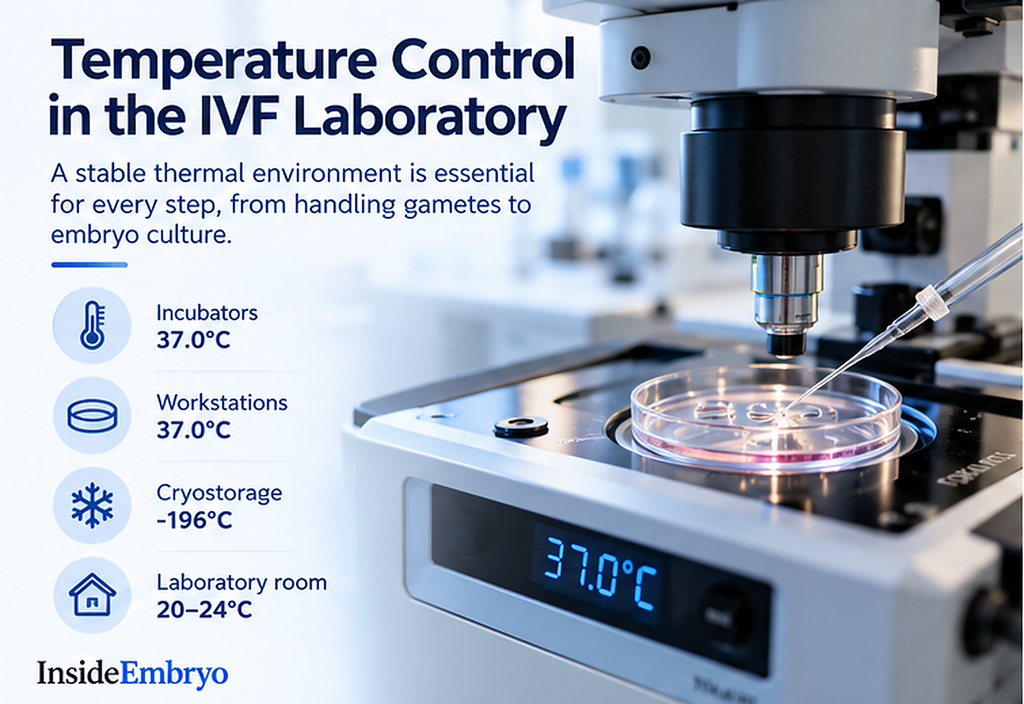
In an IVF laboratory, an oocyte can move from a collection tube to a microscope dish and then into an incubator in a relatively short period. Each move exposes it to a different surface, medium and atmosphere. One factor the embryologist works to keep as stable as possible is temperature. This matters because the reproductive cells and early embryos are living biological systems, not passive specimens.
The goal is not simply to keep the laboratory “warm”. It is to maintain the temperature experienced by the cells and their surrounding medium, particularly during handling outside the incubator. That requires careful preparation, specialised equipment, measurement and documentation. [1,2]
| In one sentence – IVF laboratories aim to keep oocytes and developing embryos near their validated physiological culture temperature—commonly close to 37°C—because cooling, overheating and repeated fluctuations can disturb cellular processes and the stability of the culture environment. [1–3] |
Table of Contents
IVF laboratory temperature control at a glance
| Laboratory stage | What needs protecting | Common control measure |
| Oocyte retrieval | Follicular aspirate and recovered cumulus–oocyte complexes | Pre-warmed collection systems, tubes, media and heated search stage |
| Oocyte identification / denudation | Oocyte and surrounding medium during microscopy | Warmed work surfaces; brief, organised manipulations |
| IVF / ICSI | Oocytes during insemination or micromanipulation | Validated heated stages and appropriate buffered media |
| Fertilisation check / grading | Zygotes and embryos temporarily outside the incubator | Minimise time away; use heated observation areas |
| Embryo culture | Embryos over several days | Incubators with stable temperature, CO₂/O₂ and monitoring |
| Embryo transfer preparation | Embryo in transfer medium before loading | Pre-equilibrated media and prompt, coordinated handling |
| Vitrification / warming | Cells undergoing an intentional cryobiological transition | Procedure-specific cryoprotectant, time and temperature control |
The examples above describe general principles rather than universal numeric set-points or step-by-step operating instructions. Each laboratory must use validated procedures and manufacturers’ recommendations. [1,2]
1. Why is temperature so important in human reproduction?
In the body, gametes and embryos encounter a highly regulated reproductive environment. In vitro fertilisation places some of these stages outside the body, where the surrounding air, work surface and culture medium can change rapidly. Laboratories therefore create an artificial but controlled environment designed to support normal cellular function. [1,3]
Temperature influences the speed of biochemical reactions, membrane behaviour, protein interactions, cytoskeletal structures and the physical properties of culture media. The response to temperature change depends on how far the temperature shifts, how long the change lasts and which cell or developmental stage is exposed. Not every brief deviation causes visible damage, but avoidable thermal stress is an unnecessary risk. [3,4]
Why is 37°C frequently used?
Around 37°C corresponds to human core body temperature and is the common reference for routine human oocyte and embryo culture. Recent ESHRE guidance explicitly recommends maintaining oocytes close to 37°C during retrieval and emphasises stable, appropriate temperatures throughout handling and culture. [1]
However, “37°C” should not be presented as a magical number to a hundredth of a degree, nor should one laboratory copy a different laboratory’s settings without validation. Culture system design, equipment performance, dish type and the location of the temperature probe all affect the temperature actually experienced by the embryo. The appropriate operating limits must be defined and verified locally. [1,2]
See This Topic on Instagram
Explore our related Instagram post for a quick visual overview.
2. The meiotic spindle: one reason oocytes are temperature-sensitive
A mature metaphase-II (MII) oocyte contains a meiotic spindle: a highly organised structure of microtubules that helps position and separate maternal chromosomes. This structure is biologically sensitive to cooling. Older live-imaging experiments showed spindle disorganisation or disappearance after substantial cooling in some human oocytes, with recovery after rewarming varying according to the degree and duration of exposure. [4]
This does not mean every minor temperature fluctuation causes chromosomal abnormalities. Much of the direct mechanistic evidence comes from experimental conditions that are more extreme than routine well-controlled laboratory work, and laboratory observations do not by themselves establish a patient-level risk after any particular brief deviation. The justified message is that the spindle provides a compelling reason to avoid unnecessary cooling during oocyte handling. [4]
| Inside the cell – At MII, the spindle helps organise the maternal chromosomes. Protecting thermal stability is one part of protecting spindle integrity; it does not replace assessment of oocyte maturity, morphology or other determinants of developmental competence. |
3. Temperature also matters after fertilisation
Once fertilisation has occurred, the zygote begins a series of cell-cycle events and divisions. Its cytoskeleton, membranes, enzymes and metabolic pathways remain temperature-dependent. During embryo culture, stable temperature is therefore considered together with pH, gas composition, osmolality, culture-medium formulation and the avoidance of unnecessary handling. [1,3]
A 2014 paired randomised trial compared human embryo culture at 36°C and 37°C. In that study, culture at 37°C produced a higher proportion of usable blastocysts per zygote, while fertilisation, aneuploidy and sustained implantation outcomes did not differ significantly. The result supports caution about deliberately lowering routine culture temperature, but a single study cannot define the ideal setting for every laboratory or prove that small short-lived fluctuations determine pregnancy outcome. [5]
A 2019 Cochrane systematic review found very-low-certainty evidence and could not establish that lower temperatures improve pregnancy outcomes. That uncertainty is another reason to distinguish established laboratory standards from claims that an alternative temperature is clinically superior. [6]
4. The number on an incubator is not the whole story
Embryos develop within tiny drops or small volumes of culture medium, often beneath an oil overlay. The relevant question is the temperature of the medium around the cells. A display showing 37°C may be measuring an internal sensor, rather than the exact temperature at every culture-dish position or on a microscope stage. A dish moved onto a cooler surface can exchange heat with that surface and the surrounding air. [1–3]
Laboratories therefore validate and check critical equipment with suitable calibrated measuring instruments. Measurements should represent real-use conditions when feasible—for example, the relevant dish, working position and handling duration—using designated test setups rather than placing probes into clinical embryos’ culture drops. [1,2]
Why can small drops change temperature quickly?
A small volume of medium has relatively little thermal mass. It can respond to a change in its surroundings faster than a larger fluid volume. The response is also affected by dish geometry, the contact surface, oil volume, airflow and time outside the incubator. An oil overlay can buffer environmental change, but it does not completely prevent temperature, pH or osmolality shifts. [1,3]
| A practical distinction – Incubator set-point ≠ heated-stage display ≠ measured temperature within the culture medium. Each may be useful, but they are not interchangeable measurements. |
5. From oocyte pickup to ICSI: avoiding cold exposure
Oocyte retrieval and identification
During oocyte pickup (OPU), follicular fluid is aspirated and brought to the embryology laboratory. Appropriate warming equipment, pre-warmed collection tubes and media, and a heated stereomicroscope stage help the embryologist locate cumulus–oocyte complexes without unnecessary thermal exposure. The 2026 ESHRE recommendations specifically discuss keeping oocytes close to 37°C and minimising the time between collection and culture. [1]
Denudation and micromanipulation
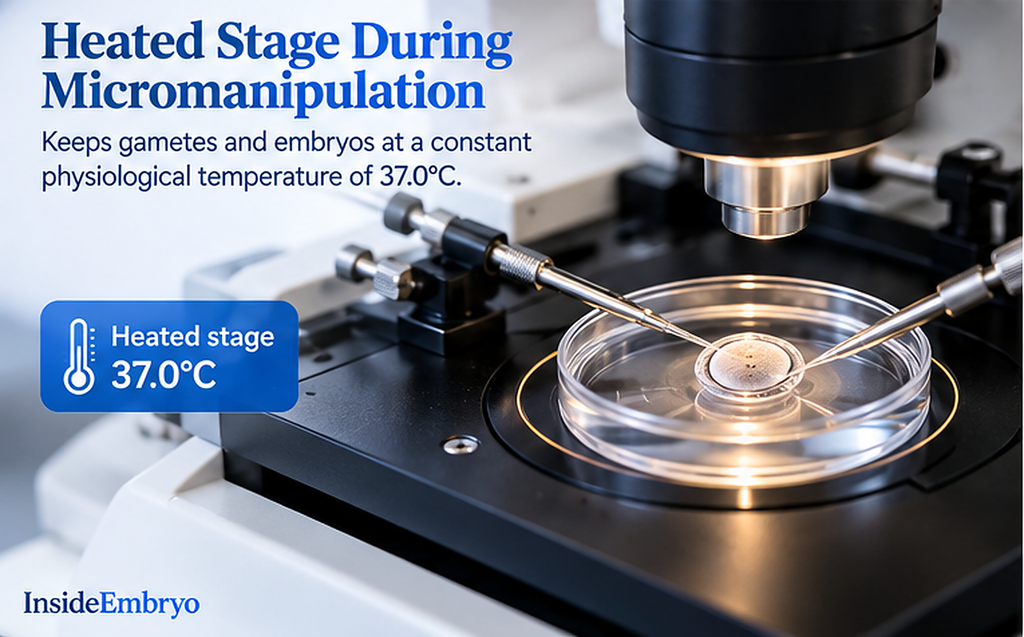
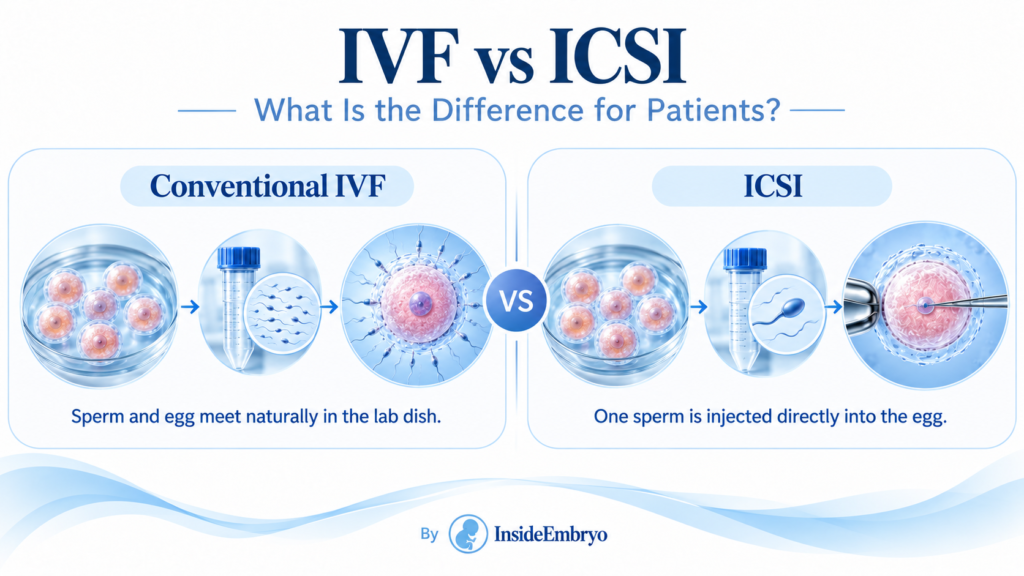
When ICSI is planned, cumulus cells are removed and nuclear maturity is assessed before injection. The embryologist may need to keep the oocyte in a micromanipulation dish while carefully positioning pipettes and completing sperm injection. A validated heated stage and suitably buffered manipulation medium are essential parts of this environment. Good organisation reduces the duration of exposure outside the incubator. [1,2]
Temperature control interacts with pH control. For example, media that rely on bicarbonate buffering need an appropriate carbon-dioxide environment, while appropriately selected HEPES- or MOPS-buffered handling media can help manage pH during necessary exposure to room air. These solutions must be used according to their intended purpose and validated protocols; temperature control alone cannot correct an inappropriate pH. [1]
6. Embryo incubators: stable conditions, not just heat
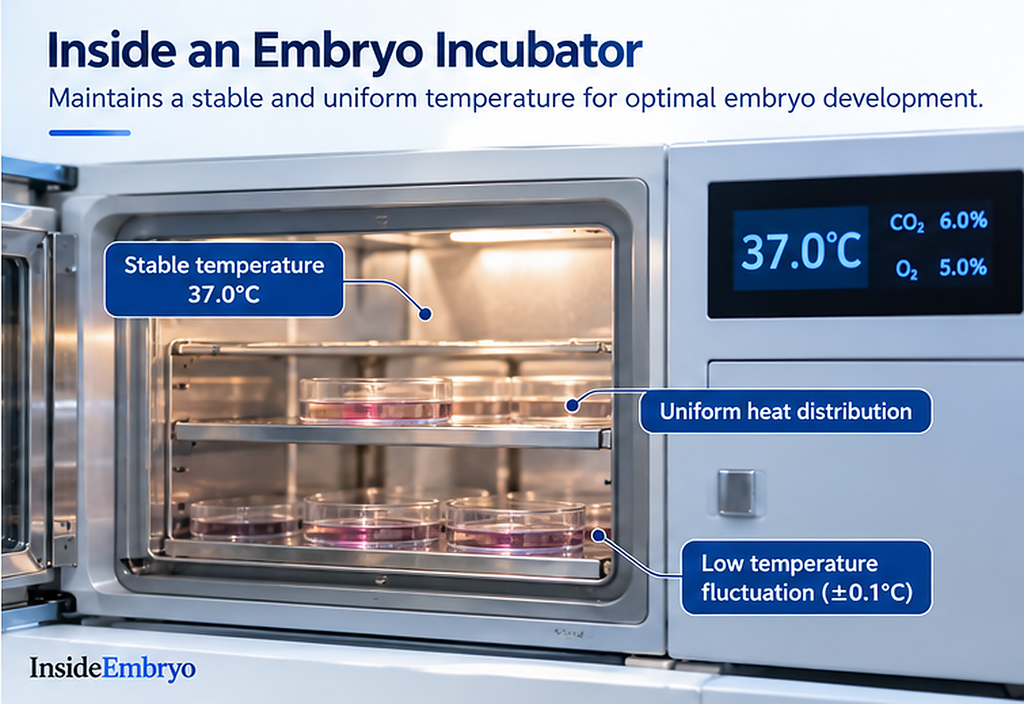
An embryo incubator is a controlled culture system. It helps maintain the temperature and atmospheric conditions in which culture medium remains suitable for embryo development. Carbon dioxide is closely linked with bicarbonate-buffered medium pH, and oxygen concentration is also controlled in many modern systems. Incubation is therefore a combination of thermal, gas and medium management, not the work of a heater alone. [1,2]
Every access event can disturb the chamber environment to some degree. Laboratories design their workflow to avoid unnecessary door opening, organise dishes and observations, and use systems appropriate for their workload. Small benchtop incubators, larger multi-compartment units and time-lapse incubators differ in design; good performance depends on validation, maintenance and operating practice rather than the equipment name alone. [1,2]
7. What happens during embryo observation and transfer?
Embryologists make planned observations at fertilisation checks, cleavage-stage assessments and blastocyst grading. When a dish leaves the incubator, maintaining the relevant surface temperature and shortening unnecessary exposure help preserve culture stability. The embryo is returned to appropriate conditions as promptly as the task allows. [1,2]
Before embryo transfer, the laboratory prepares and equilibrates the intended medium and coordinates with the clinical team. The duration of handling and the embryo’s exposure to uncontrolled surfaces matter more than simply assuming that every instrument remains at temperature after being removed from a warmer. The updated ESHRE guidance notes that pre-warming pipettes or catheters offers limited benefit because they lose heat rapidly once removed from the heat source. [1]
8. What about vitrification and embryo warming?
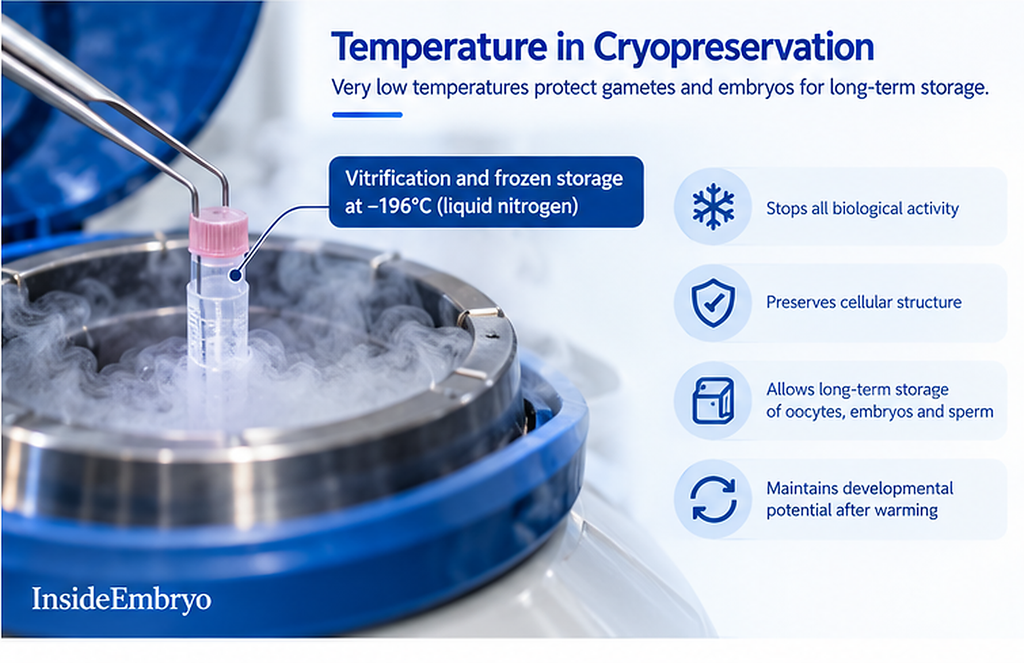
Vitrification is the deliberate exception to ordinary near-physiological culture. Oocytes or embryos are exposed to specified cryoprotectant solutions and rapidly cooled under a validated protocol, then stored at cryogenic temperatures. On the day of use, warming procedures reverse this transition through controlled steps. Those intentionally rapid thermal and osmotic changes are fundamentally different from an accidental cooling of a culture dish. [1,2]
ESHRE’s 2026 recommendations also address cryostorage monitoring and the need to maintain appropriate cryogenic storage and transport conditions, stating that temperatures should not rise above −140°C during storage and transport. The exact media, exposures, handling stages and timing are cryopreservation-protocol specific. [1]
| Do not confuse two goals – Embryo culture: maintain a stable, validated near-physiological environment. Vitrification and cryostorage: achieve and maintain defined cryogenic conditions, then warm using a validated sequence. Both require precision, but they are not the same temperature target. |
9. How do IVF laboratories check that temperature control is working?
Temperature protection depends on a quality-management system, not an individual embryologist’s memory. Professional guidance recommends routine checking, calibration, documentation, alarms and predefined actions when critical equipment is outside its accepted operating range. [1,2]
| Quality-control activity | Why it matters |
| Pre-use checks | Identify unexpected readings before handling clinical specimens. |
| Calibration and verification | Check measured performance against a traceable reference rather than trusting display settings alone. |
| Defined acceptance limits | Establish equipment-specific, validated tolerances and escalation rules. |
| Continuous alarms | Detect significant excursions in critical incubators and cryostorage systems. |
| Preventive maintenance | Reduce malfunction risk and preserve equipment performance over time. |
| Backup and contingency plans | Support safe action during power failure, equipment breakdown or out-of-range readings. |
| Deviation documentation | Record what happened, the specimens potentially affected, corrective action and effectiveness checks. |
A well-designed system also distinguishes the temperature of room air from the temperatures of heated stages, incubators, warming blocks and culture media. All may be monitored, but each serves a different purpose. [2]
10. If temperature changes briefly, has an embryo been harmed?
There is no scientifically responsible yes-or-no answer without knowing the magnitude, duration, developmental stage, surrounding medium and circumstances of the event. Biological temperature sensitivity is real, but a single short exposure is not automatically equivalent to permanent injury or loss of developmental potential. The response is to minimise avoidable excursions and assess any significant deviation within a validated quality system. [1,3–5]
Patients also should not interpret a fertilisation or blastocyst result as proof of a temperature problem. Oocyte competence, sperm factors, chromosomal events, culture conditions and natural developmental attrition all influence outcomes. Good temperature control reduces one preventable source of laboratory stress; it cannot make every oocyte fertilise or every embryo reach the blastocyst stage.
What precise temperature control can—and cannot—do
| Can help | Cannot guarantee |
| Reduce avoidable thermal stress during handling | Normal fertilisation of every mature oocyte |
| Support a stable environment for embryo culture | That every zygote reaches a blastocyst |
| Protect temperature-sensitive structures during routine work | Euploidy or freedom from all cellular abnormalities |
| Improve equipment reliability through checks and alarms | Implantation, pregnancy or a live birth |
| Provide traceable evidence of responsible laboratory practice | That all biological outcome differences are caused by temperature |
MYTH vs FACT
| MYTH | FACT |
| If the incubator says 37°C, every culture drop must be exactly 37°C. | The display measures a particular sensor. Temperature at the dish or medium must be assessed through appropriate equipment validation and monitoring. [1,2] |
| A brief temperature change always destroys an oocyte or embryo. | Risk depends on severity, duration, stage and other conditions. Avoiding excursions is good practice, but automatic irreversible damage cannot be inferred from every short change. [3,4] |
| Only temperature matters while embryos are in the incubator. | Temperature is one component of a system that also includes pH, gas composition, osmolality, media and appropriate handling. [1,3] |
| Cooling embryos to 36°C is proven to produce better IVF results. | A paired randomised study did not show an improvement from culture at 36°C; usable blastocyst formation was higher in its 37°C group. Findings should not be generalised beyond the study. [5] |
| Vitrification is just accidental cooling performed faster. | Vitrification is a deliberately controlled cryobiological procedure involving cryoprotectants, timing and rapid thermal changes, whereas incidental cooling during routine culture is an unwanted deviation. [1,2] |
Beginner glossary
| Glossary Term | One-Line Definition |
|---|---|
| Meiotic Spindle | A microtubule-based structure responsible for chromosome alignment and segregation during oocyte meiosis. |
| Osmolality | The concentration of osmotically active particles in a solution, influencing cellular water balance and embryo culture stability. |
| Cryoprotectant | A substance used during cryopreservation to reduce cellular injury associated with ice formation and osmotic changes. |
| Vitrification | An ultra-rapid cryopreservation process that converts a solution into a glass-like state while minimising ice-crystal formation. |
| Thermal Equilibration | The process by which culture media, dishes or laboratory systems reach and stabilise at the intended operating temperature. |
| Culture Medium | A specialised nutrient-containing solution formulated to support gametes and preimplantation embryos under in-vitro conditions. |
Frequently asked questions
Why are IVF embryos usually cultured near 37°C?
This is close to human core body temperature and a widely used, validated reference for reproductive-cell culture. ESHRE guidance calls for temperature stability and recommends keeping oocytes near 37°C during retrieval. Exact control and monitoring are laboratory specific. [1]
Is room temperature the same as the embryo’s temperature?
No. IVF laboratories generally regulate room conditions for staff and environmental control while keeping oocytes and embryos on warmed surfaces or within incubators. The critical measurement is the condition experienced by the culture dish and medium. [1,2]
Can cooling damage an oocyte’s meiotic spindle?
Experimental human-oocyte imaging has shown sensitivity of spindle microtubules to substantial cooling. The extent of recovery varies with exposure conditions, so the laboratory seeks to minimise unnecessary cooling. [4]
Does opening an incubator harm all embryos inside?
No. Opening can change its chamber conditions, which is why embryologists limit unnecessary disturbance and monitor system recovery. It is not correct to assume that every opening causes embryo damage. [1–3]
Does a time-lapse incubator remove the need for temperature control?
No. Continuous imaging can reduce the need for some dish removals and allows observation of development, but the incubator itself still requires validated temperature, gas, maintenance and alarm systems. [1,2]
Are frozen embryos stored at 37°C?
No. Routine embryo culture and cryogenic embryo storage are entirely different conditions. Cryopreserved samples remain at very low temperatures and follow specific warming procedures when required. [1]
Does better temperature control guarantee an IVF pregnancy?
No. It helps maintain a well-controlled laboratory environment, but implantation and live birth depend on numerous biological, clinical and laboratory factors.
Key takeaways
- The laboratory protects the temperature experienced by the oocyte or embryo—not merely the room thermostat or incubator display.
- Human MII oocytes have temperature-sensitive meiotic spindles, giving a biological reason to avoid unnecessary cooling.
- Incubators control temperature together with the gas and medium conditions needed for preimplantation embryo culture.
- Pre-warmed media, heated stages, efficient handling, calibrated probes, alarms and documentation contribute to safe practice.
- Vitrification and warming use intentionally different thermal conditions under dedicated protocols.
- Temperature stability is an important quality measure, but it cannot guarantee normal fertilisation, blastocyst development or pregnancy.
The take-home message
The small interval between moving a dish and returning it to the incubator may look unimportant from outside the laboratory. To an embryologist, it is a period that needs planning. A carefully warmed workstation, suitable medium, dependable incubator and checked equipment all serve the same purpose: to reduce avoidable stress while living human cells complete highly coordinated biological events.
Temperature control is not an invisible “extra” in IVF. It is one of the foundations of consistent laboratory practice—important precisely because good practice protects the conditions of development without claiming control over the biological outcome. [1–3]
| Inside Embryo note – Understanding temperature control helps explain why embryologists prepare media in advance, work on heated surfaces, limit unnecessary embryo handling and document daily incubator checks. Each of those actions protects the conditions in which the embryo develops. |
Suggested related reading on Inside Embryo
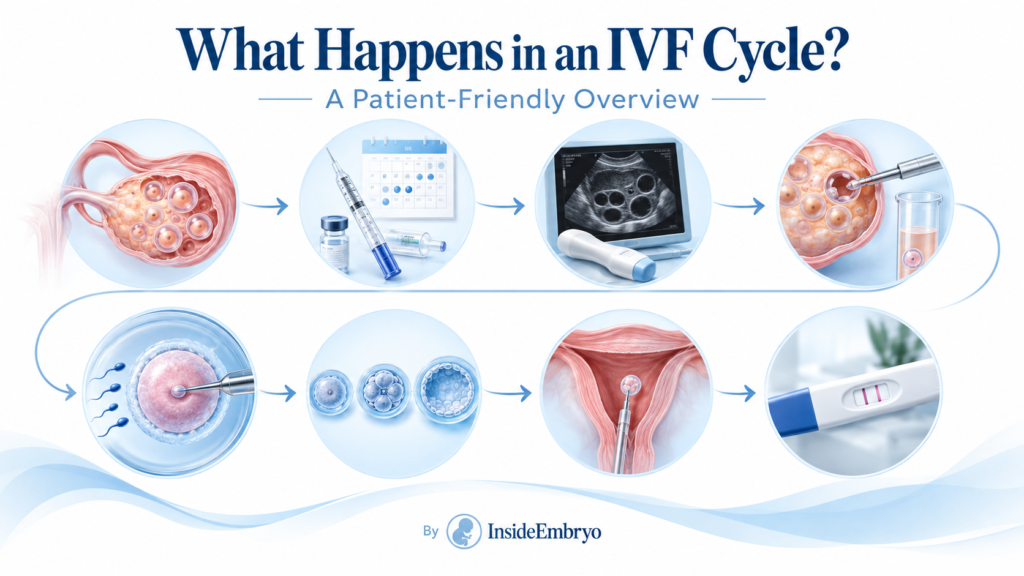
- What Happens in an IVF Cycle? A Patient-Friendly Overview
- Anatomy of the Human Oocyte: Structures Every Embryology Student Should Know
- How Spermatogenesis Produces Mature Sperm
- What Happens in the First 24 Hours After Fertilisation?
About the author
Manoj Kumar K, M.Sc. Assisted Reproduction and Embryology — Embryologist and founder-author of Inside Embryo. Inside Embryo shares science-based educational content on human reproduction, IVF laboratory practice, embryology and assisted reproductive technology for patients, students and healthcare professionals.
Medical disclaimer
This article is intended for scientific and general educational purposes only. It is not a clinical recommendation, laboratory standard operating procedure, device validation guide or substitute for supervised professional training. Specific temperature ranges, culture-media conditions, handling steps, cryopreservation protocols and actions following equipment deviations must be determined by each laboratory’s validated procedures, manufacturer instructions, professional guidance and applicable regulations. It cannot predict the outcome of an individual IVF cycle.
Full Inside Embryo Medical Disclaimer: insideembryo.com/medical-disclaimer/
References and further reading
1. ESHRE Good Practice in the IVF Lab Working Group. ESHRE recommendations on Good Practice in the IVF laboratory. Human Reproduction. 2026;41(8):1245–1269. doi:10.1093/humrep/deag096.Open source ↗
2. Practice Committees of ASRM and SRBT. Comprehensive guidance for human embryology, andrology, and endocrinology laboratories: management and operations. Fertility and Sterility. 2022;117(6):1183–1202. doi:10.1016/j.fertnstert.2022.02.016.Open source ↗
3. Wale PL, Gardner DK. The effects of chemical and physical factors on mammalian embryo culture and their importance for the practice of assisted human reproduction. Human Reproduction Update. 2016;22(1):2–22. doi:10.1093/humupd/dmv034.Open source ↗
4. Wang WH, Meng L, Hackett RJ, Odenbourg R, Keefe DL. Limited recovery of meiotic spindles in living human oocytes after cooling–rewarming observed using polarized light microscopy. Human Reproduction. 2001;16(11):2374–2378. doi:10.1093/humrep/16.11.2374.Open source ↗
5. Hong KH, Lee H, Forman EJ, Upham KM, Scott RT Jr. Examining the temperature of embryo culture in in vitro fertilization: a randomized controlled trial comparing traditional core temperature (37°C) to a more physiologic, cooler temperature (36°C). Fertility and Sterility. 2014;102(3):767–773. doi:10.1016/j.fertnstert.2014.06.009.Open source ↗6. Baak NA, Cantineau AEP, Farquhar C, Brison DR. Temperature of embryo culture for assisted reproduction. Cochrane Database of Systematic Reviews. 2019;(9):CD012192. doi:10.1002/14651858.CD012192.pub2.Open source ↗
From start to finish, your content is simply amazing. You have a talent for making complex topics easy to understand and I always come away with valuable insights.