Articles

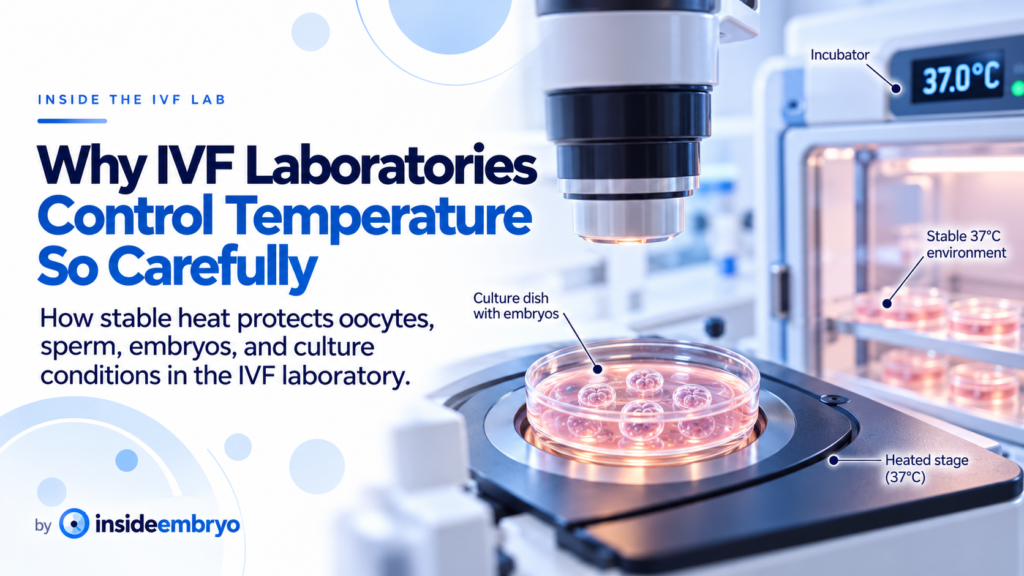
IVF laboratory temperature control showing an embryo culture dish on a heated microscope stage with an incubator displaying 37°C.
Articles, IVF Laboratory

Why IVF Laboratories Control Temperature So Carefully

Temperature control is one of the most important aspects of IVF laboratory practice. Discover why oocytes, sperm, and embryos require carefully regulated thermal conditions, how incubators and heated microscope stages maintain stability, and how embryologists minimise temperature fluctuations during fertilisation, embryo culture, and cryopreservation.

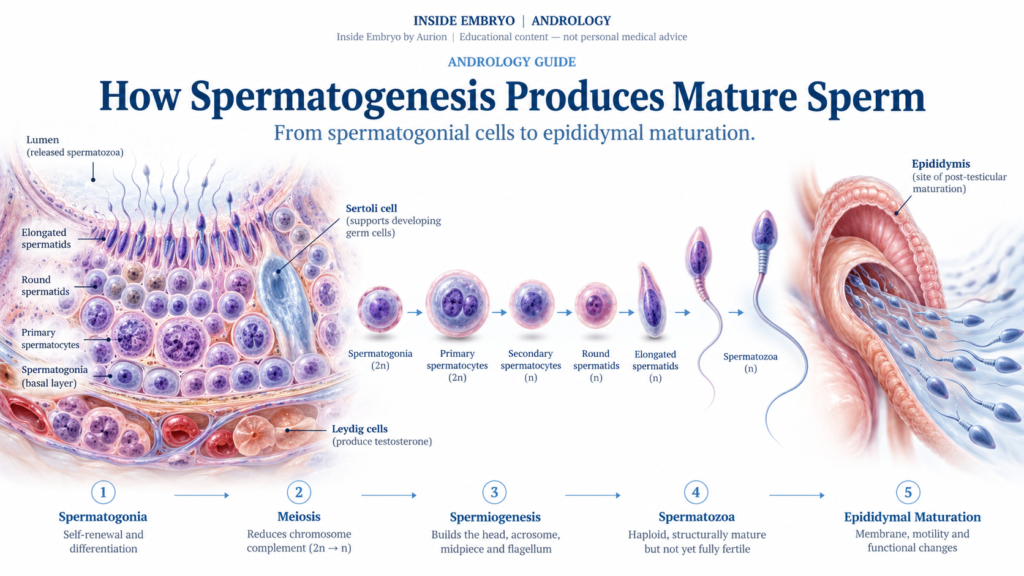
Scientific illustration of spermatogenesis showing developing germ cells within the seminiferous tubule progressing from spermatogonia to spermatocytes, spermatids and spermatozoa, followed by epididymal maturation.
Articles, Andrology

How Spermatogenesis Produces Mature Sperm

Learn how spermatogenesis produces mature sperm through mitotic proliferation, meiosis, spermiogenesis and epididymal maturation. This guide explains the roles of spermatogonia, spermatocytes, spermatids, Sertoli cells, Leydig cells and hormones in human sperm development.

Articles, Patient Education

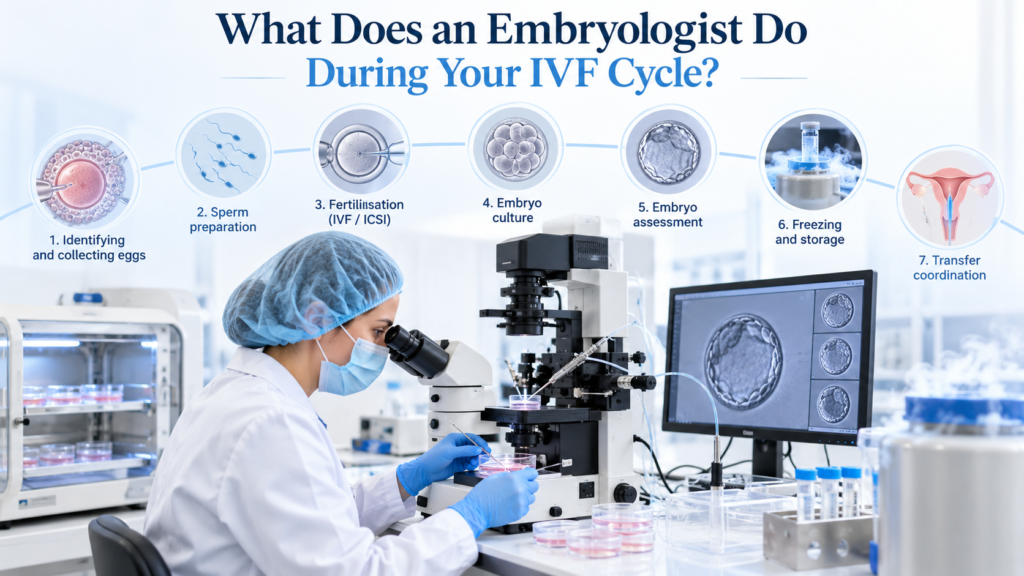
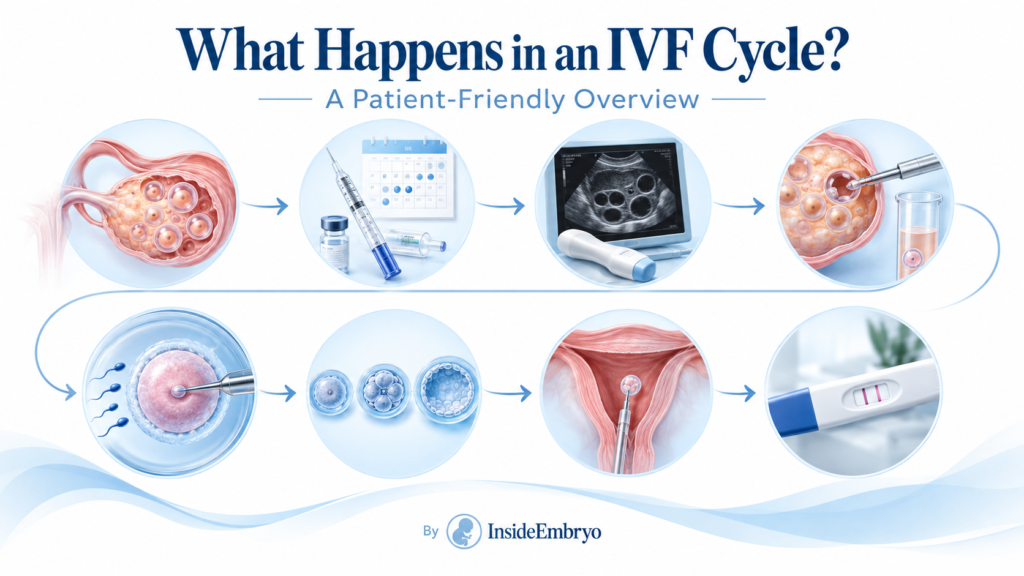
What Happens in an IVF Cycle? A Patient-Friendly Overview

Starting an IVF cycle can feel overwhelming when you are unsure what happens next. This patient-friendly guide explains the IVF journey step by step—from ovarian stimulation, monitoring and egg retrieval to fertilisation, embryo development, embryo transfer and pregnancy testing—so you can understand what happens both in the clinic and inside the embryology laboratory.

Scroll to Top