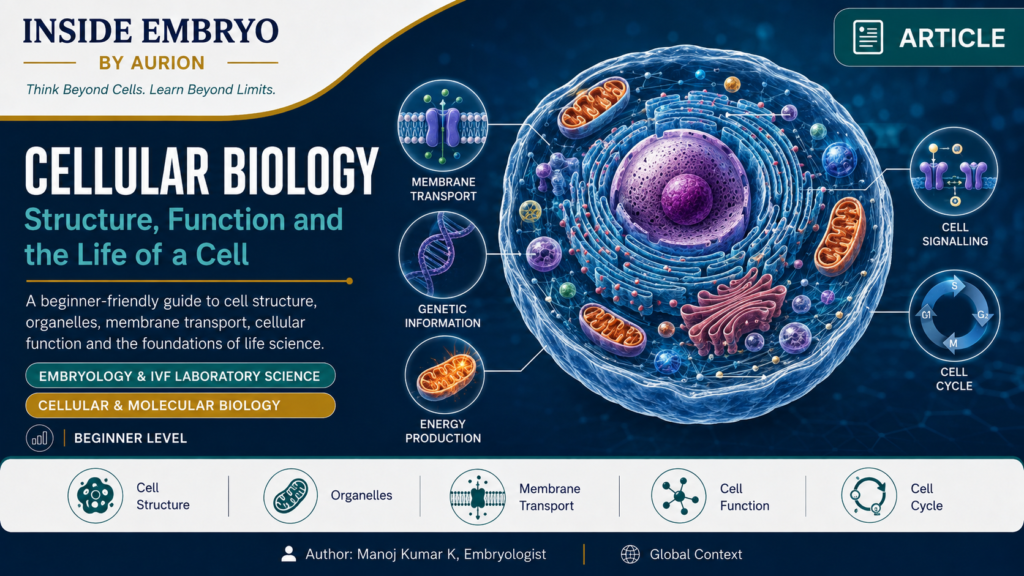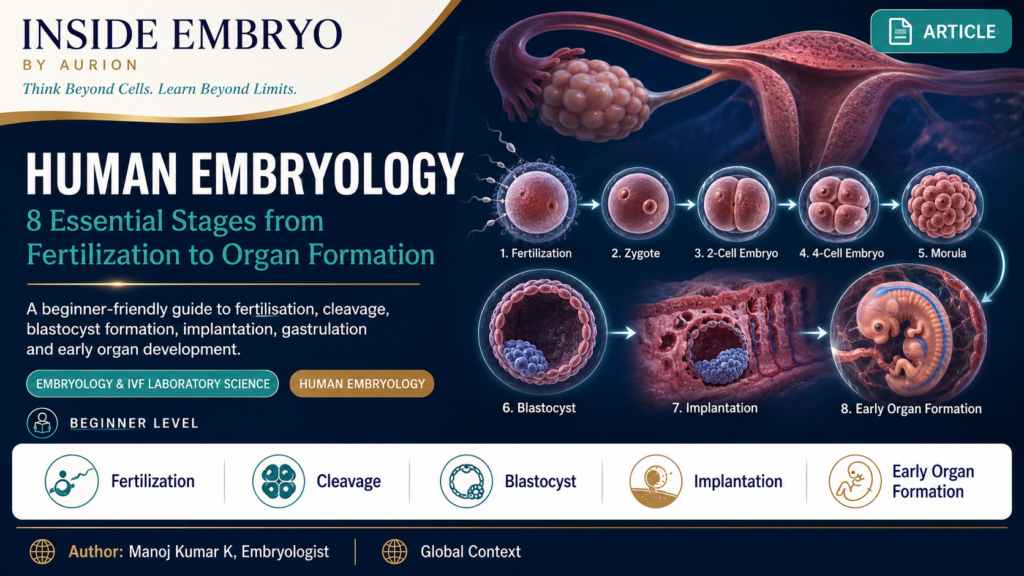
Understanding IVF laboratory design is essential for anyone beginning their journey in clinical embryology and assisted reproductive technology.
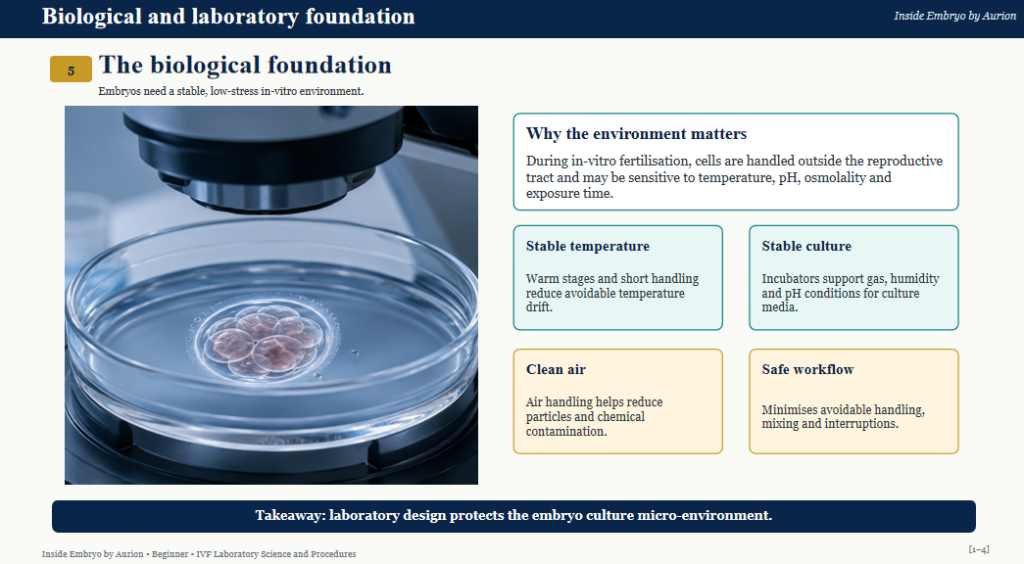
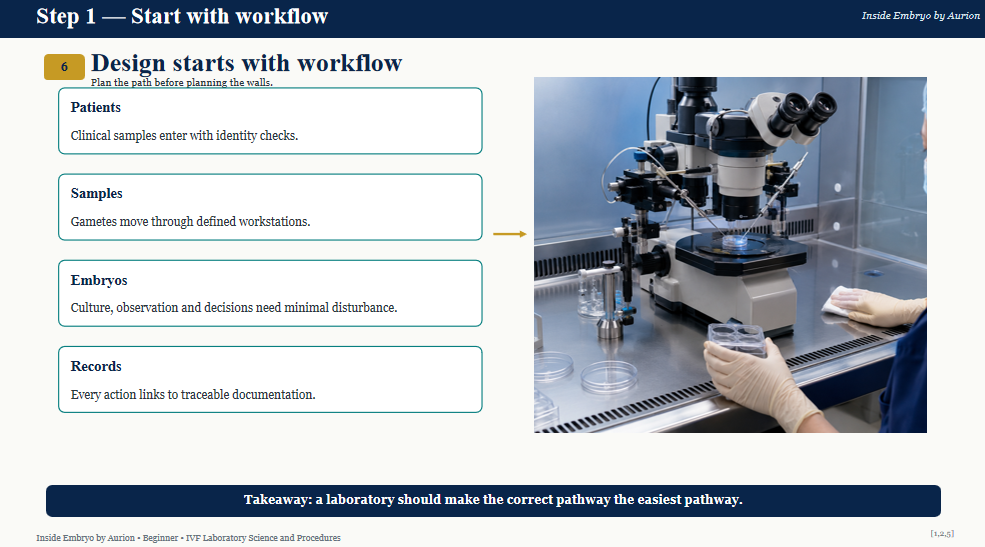
This beginner-level PowerPoint introduces the fundamental principles involved in designing and organising an in vitro fertilisation (IVF) laboratory. It explains how laboratory layout, workflow, environmental control, equipment positioning, air quality, contamination prevention and movement of personnel can influence the safety and consistency of embryology laboratory operations.
The presentation follows a simple visual learning sequence, allowing learners to understand how different laboratory zones work together to support gamete and embryo handling.
Scientific illustrations, workflow diagrams, comparison panels and practical examples are used throughout the presentation to make complex laboratory-design principles easier to understand.
This resource is intended as a foundation learning presentation for students, trainee embryologists, IVF laboratory observers and allied fertility-care professionals.
It should be used alongside institutional protocols, supervised laboratory training and current professional guidance.
WHAT YOU WILL LEARN
After completing this presentation, you should be able to:
• Define an IVF laboratory and explain its primary purpose.
• Identify the major functional areas commonly found within an IVF laboratory.
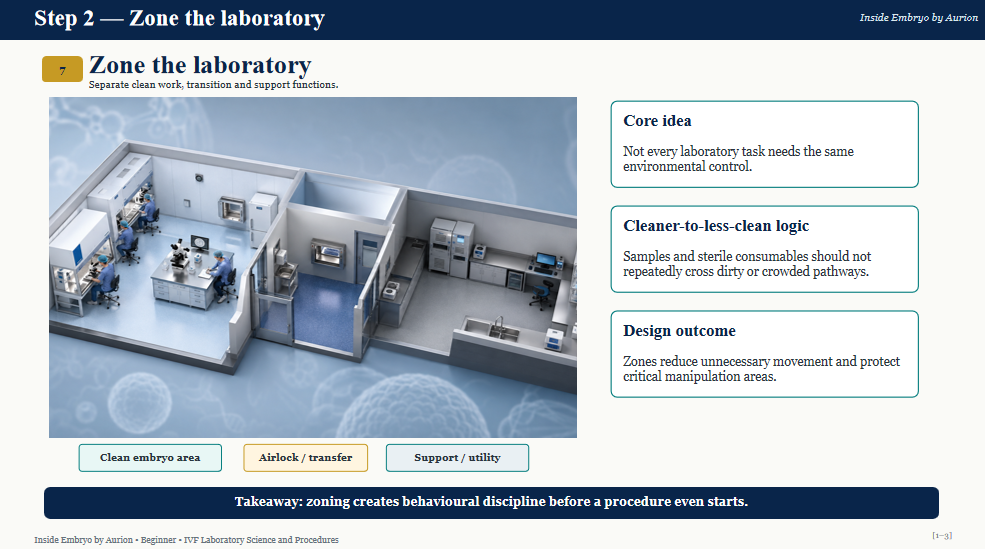
• Understand the importance of laboratory zoning and controlled workflow.
• Explain why temperature, humidity, air quality and environmental stability matter during gamete and embryo handling.
• Recognise how equipment placement can support efficient and safe laboratory operations.
• Understand the basic principles of contamination control and movement within the laboratory.
• Distinguish between general clinical areas and highly controlled embryology laboratory environments.
• Recognise that successful ART laboratory performance depends on multiple interacting factors rather than laboratory design alone.
WHO IS THIS RESOURCE FOR?
This presentation is designed primarily for:
• Undergraduate students
• New clinical embryology trainees
• IVF laboratory observers
• Reproductive-science students
• Nursing and allied-health learners
• Fertility-care professionals beginning ART training
• Readers seeking a structured introduction to IVF laboratory design
| Resource Information | Details |
|---|---|
| Title | IVF Laboratory Design: Complete Foundation Presentation |
| Resource Type | Educational PowerPoint Presentation |
| Learning Level | Beginner |
| Category | Embryology and IVF Laboratory Science |
| Subcategory | IVF Laboratory Science and Procedures |
| Author | Manoj Kumar K |
| Publisher | Inside Embryo by Aurion |
| Format | PowerPoint (.pptx), 16:9 Widescreen |
| Estimated Learning Time | 12–18 minutes |
| Published | 10 August 2026 |
| Website | insideembryo.com |
Educational use only. This presentation supports scientific learning, supervised training and academic discussion. It is not an executable clinical protocol and does not authorise unsupervised manipulation of human gametes or embryos.
Users must follow current institutional SOPs, manufacturer IFUs, equipment qualification and validation requirements, competency programmes, professional guidance and applicable regulations. Numerical settings, tool geometry, release ranges and troubleshooting procedures must be defined locally rather than copied from a teaching presentation.
© Inside Embryo by Aurion. Personal educational use is permitted. Republishing, reselling, modifying or distributing the presentation without permission is prohibited.
Inside Embryo by Aurion
Scientific learning in embryology, assisted reproduction and fertility care.
Learn scientifically. Think critically. Apply responsibly.